Read-aloud prompts, picture book picks, and simple decoding materials for beginning readers, with gentle tracking sheets that celebrate each early milestone.
Short, steady practice works best at this stage. Try these everyday moves at home or in the classroom.
Read aloud every day
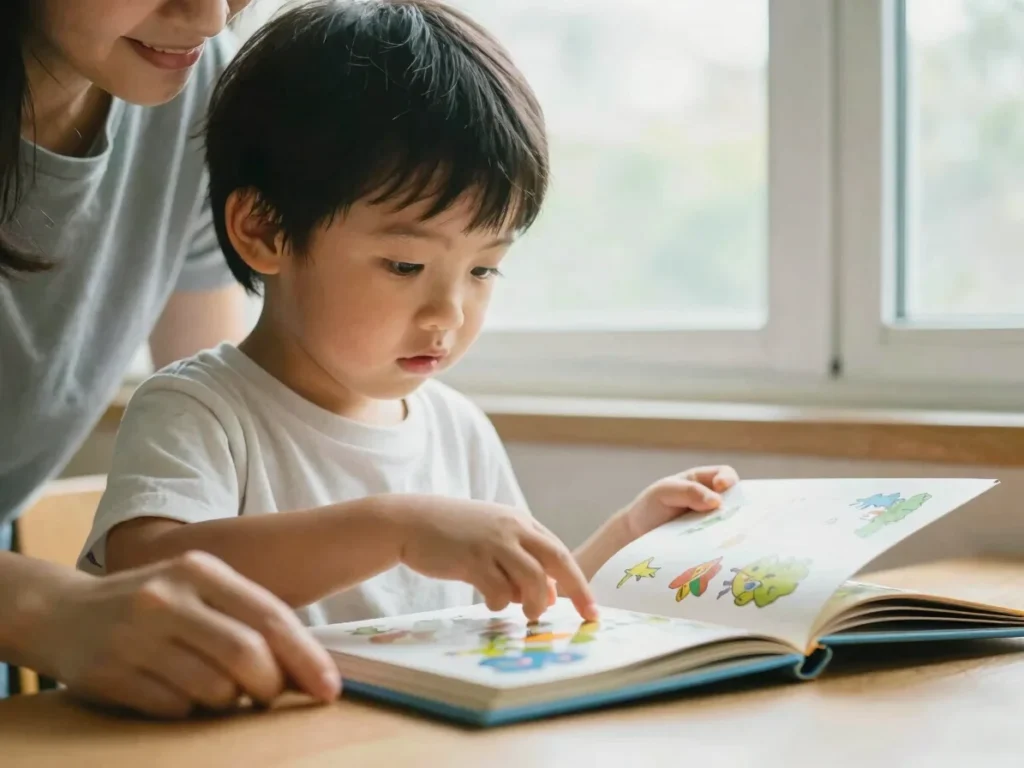
Pause to point at pictures and ask what might happen next. Listening builds vocabulary and story sense before decoding catches up.
Play with sounds
Clap syllables, spot words that start alike, and stretch sounds slowly. Phonemic awareness is a game that needs no printed page.
Take turns reading
Alternate pages, echo a favorite line, or read a repeated refrain together. Shared reading keeps the focus on enjoyment.
Kindergarten to Grade 2
Beginning reader materials
Kindergarten focuses on letter sounds and read-aloud routines. First grade builds simple decoding with repeated patterns. Second grade moves toward short chapter-style books and reading stamina.
Each level pairs a book-picking activity with a low-pressure tracking sheet for phonics and story milestones.
Paired activity: Sound hunt
Find three objects in the room that share a starting sound and say them together before reading a picture book.
Paired activity: Picture walk
Browse the illustrations first, predict the story, then read the words and check the predictions afterward.